


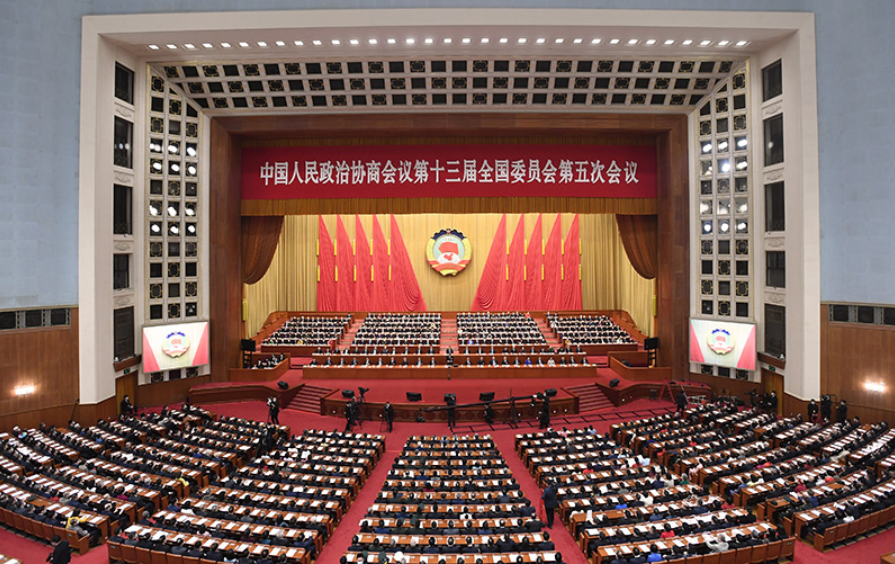
On March 11, 2022, the 2022 National "Two Sessions" successfully concluded. The annual "Two Sessions" leave five major "exam questions" for the medical information industry, which HIT Expert Network summarizes as follows.
Exam Question 1: Epidemic prevention and control shift towards "scientific precision", "one code access" urgently needs to be solved
The 2022 Government Work Report:
Establish a sound disease prevention and control network... enhance the monitoring and early warning, epidemiological investigation and tracing, and emergency response capabilities for major epidemics
In 2022, the COVID-19 epidemic will enter its third year. Over the past three years, various regions have utilized information technology to support the normalization of epidemic prevention and control work, playing a significant role in supporting epidemic monitoring and analysis, and promoting the safe and orderly flow of personnel. In important aspects such as nucleic acid testing, the information technology capabilities of large-scale nucleic acid testing in various regions have been "evolved" in actual combat. Nowadays, epidemic prevention and control is shifting towards a new stage of "scientific and precise prevention and control", and information technology will further play a positive role.
Ge Junbo, a member of the National Committee of the Chinese People's Political Consultative Conference and academician of the Chinese Academy of Sciences, believes that the information platforms of provincial disease control departments are currently not connected, which makes it difficult to trace the information of key targets for epidemic prevention and control, achieve efficient "person to person prevention", and quickly take disposal measures for the places and contact items of key targets. It is necessary to accelerate data docking and sharing, achieve national disease control information interconnection, and consolidate the foundation of digital transformation of disease control. Zhang Boli, a deputy to the National People's Congress and an academician of the CAE Member, suggested that in the future, more efforts should be made to optimize the precise prevention and control plan, more accurately delineate the scope of the containment zone, control zone and prevention zone, and more strictly implement the isolation time. Liu Wei, a member of the National Committee of the Chinese People's Political Consultative Conference and Chairman of Guangzhou Jiadu Group Co., Ltd., proposed that a multi-dimensional and multi-level information platform can be used to establish a smart operation and management system for centralized isolation medical observation sites, improve epidemic prevention efficiency, and provide scientific decision-making references for epidemic prevention and control.
In addition, Wang Yu, a member of the National Committee of the Chinese People's Political Consultative Conference and Chairman of Spring Airlines, found during his research that there are still issues with the unification and exchange of key information such as health codes and nucleic acid testing certificates in various regions during the epidemic prevention and control process. Cai Weiping, a deputy to the National People's Congress and chief expert of the Infectious Diseases Center of the Eighth Affiliated City Hospital of Guangzhou Medical University, said that the prevention and control of infectious diseases needs unified coordination across administrative regions and departments. At present, the self built health codes around the country are difficult to achieve this goal. It is necessary to build a nationwide unified management health code to collect information on epidemic prevention and control around the country and open up data islands.
Exam Question 2: Information technology supports the supervision of medical insurance funds, and direct settlement of medical treatment in different places is a "necessity"
The 2022 Government Work Report:
Strengthen the supervision of medical insurance funds... improve the direct settlement method for cross provincial and cross regional medical treatment
The field of medical insurance has been a hot topic of discussion during the annual "Two Sessions". In the nearly four years since the establishment of the National Medical Insurance Administration in 2018, the construction of medical insurance informationization has been advancing rapidly. Currently, a unified national medical insurance information platform has been built and gradually launched in various regions, forming a "one game" pattern of national medical insurance informationization. On this basis, the problems that have plagued the medical insurance department for a long time, such as non-uniform standards and non mutual recognition of data, are expected to be solved, and the application of medical insurance informatization will develop in depth, such as "Internet plus medical health" medical insurance services, medical insurance big data and intelligent monitoring, medical insurance electronic vouchers, off-site medical records, off-site medical settlements, etc.
At the 2022 National People's Congress and Chinese People's Political Consultative Conference, several representatives and committee members provided suggestions and recommendations around the goals of fair medical insurance, rule of law medical insurance, safe medical insurance, and smart medical insurance proposed in the "14th Five Year Plan for National Medical Security".
In terms of off-site medical record keeping and settlement, Yu Xueqin, a deputy to the National People's Congress and vice chairman of the labor union of Dongguan Bus Co., Ltd., believes that there are many manual review links and long process for off-site medical record keeping, and suggests accelerating the unification of off-site medical insurance record keeping channels, avoiding multi head and multi port applications, simplifying the application process, and promoting automatic system review; Han Qinghua, a member of the National Committee of the Chinese People's Political Consultative Conference and Vice President of the First Hospital of Shanxi Medical University, suggested further promoting the convenience of medical insurance settlement for out of town medical treatment, giving priority to the settlement needs of "essential" people such as those who reside outside the city and those who have sudden emergencies outside the city.
In terms of the supervision of medical insurance funds, the "Regulations on the Supervision and Management of the Use of Medical Security Funds" issued in February 2021 have brought the supervision of medical insurance funds into a legal track, emphasizing the importance of using information technology in strengthening regulatory measures. Afterwards, various regions have built intelligent supervision systems and smart medical insurance platforms to strengthen the safety net of medical insurance funds; On the other hand, for the hospital side, the intelligent review of medical insurance funds has become imperative. By discovering violations in the first place during patient visits and making timely corrections, a closed-loop management approach is adopted to ensure the rationality of the use of medical insurance funds within the hospital.
Exam Question 3: DRG/DIP medical insurance payment method "full coverage", hospital refined management is imperative
The 2022 Government Work Report:
Deepen the reform of medical insurance payment methods... Deepen the reform of public hospitals
Medical insurance payment is the 'baton'. With the continuous development of medical insurance informationization applications such as remote medical settlement and intelligent supervision of medical insurance funds, this will directly drive the fine management and informationization construction of hospitals.
2021 is an important historical milestone in the reform of medical insurance payment methods. In November 2021, the National Healthcare Security Administration released the "Three Year Action Plan for DRG/DIP Payment Reform", which clearly stated that the reform will be accelerated in stages and batches, and by the end of 2024, all coordinated regions in China will carry out DRG/DIP payment reform work; By the end of 2025, DRG/DIP payment methods will cover all eligible medical institutions providing inpatient services.
The full coverage of DRG/DIP payment methods is driving hospitals to undergo structural adjustments, posing significant challenges to hospital operations. Li Weimin, a deputy to the National People's Congress and president of West China Hospital of Sichuan University, suggested that in order to meet the challenges, the hospital should make preparations in advance in terms of comprehensive analysis of grouping scheme, strengthening the management of the first page of medical records, precise coding, strengthening the fine management of single disease, strengthening clinical pathway, etc. Ge Minghua, deputy to the National People's Congress, deputy director of the Zhejiang Provincial Health Commission, and president of the Zhejiang Provincial People's Hospital, believed that the hospital's clinical and medical technology department directors should have a stronger ability to "integrate industry and finance", strengthen the cost awareness of medical staff, promote the front-line initiative to control expenses, and strengthen cost assessment.
Public hospitals have always lacked motivation for refined management. Nowadays, guided by the goal of "high-quality development", a series of policies represented by the reform of medical insurance payment methods are forcing public hospitals to improve quality, control fees, and increase efficiency, thereby changing the previous extensive expansion model and instead focusing on improving internal strength and tapping into internal potential. It can be expected that there will be a surge in demand for intelligent hospital management in various fields such as comprehensive budget management, cost management, performance management, operational management, quality control management, logistics management, and medical consumables logistics management.
Exam Question 4: Further Improving Medical Services and Making Hospital Digital Transformation "More Warm"
The 2022 Government Work Report:
Focusing on promoting hierarchical diagnosis and optimizing the order of medical treatment... to enable the public to receive better medical services nearby
Medical care is a livelihood issue, and proposals on how to improve patient satisfaction with medical treatment have always been the focus of attention at the National People's Congress and the Chinese People's Political Consultative Conference.
Cai Xiujun, a member of the National Committee of the Chinese People's Political Consultative Conference and the director of the affiliated Run Run Shaw Hospital of Zhejiang University School of Medicine, stated that current medical institutions are all taking the path of digital healthcare. However, digital healthcare is not only about hardware construction, but also requires addition and care to serve patients, allowing technology to truly solve the problem of "urgent, difficult, and anxious" medical treatment for the people. Therefore, he suggests further promoting the deep integration of digital technology and medical services to better improve the quality and efficiency of medical care.
In 2021, the Zhejiang Provincial Health Commission promoted the "1314" digital reform of health care, and the way people seek medical treatment is undergoing significant changes. Taking the Run Run Shaw Hospital at Zhejiang University as an example, patients can complete all medical procedures within the hospital with just one smartphone, reducing the average outpatient time from 4-5 hours in the past to 1.7 hours. In the "Digital Transformation 2.0 Work Plan for Convenient Medical Services" in Shanghai, seven new application scenarios of "convenient medical services" are promoted, including intelligent triage guidance and intelligent post diagnosis management. The focus is on improving pain points such as difficulty in seeking medical treatment, long time, and lack of humanization, and promoting the digital transformation of hospitals from the perspective of patient services.
Internet hospitals are also one of the digital means to make it easier for people to get medical treatment. Gu Jianwen, member of the National Committee of the Chinese People's Political Consultative Conference and director of the Special Medical Center of the Strategic Support Force, pointed out that more than 1700 Internet hospitals have been built in the country, but more than 90% of Internet hospitals are in a "zombie state" of being built without use or just a taste of it, and most Internet hospitals are reduced to "registration tools". How to position and develop Internet medicine and smoothly move from "construction period" to "operation period", so as to avoid idle resources and low efficiency, has become a problem that needs to be considered and solved in the current industry. In specific practice, some hospitals "activate" Internet hospitals by activating the demand stock of medical resources, starting from "patient management" to the process of diagnosis, so as to play its due value.
Exam Question 5: To unleash the value of medical data as a production factor, the rule of law and security awareness are indispensable
The 2022 Government Work Report:
Improve digital economy governance, unleash the potential of data elements, better empower economic development, enrich people's lives... strengthen network security, data security, and personal information protection
In the "Opinions on Building a More Comprehensive Market based Allocation System and Mechanism for Factors" issued by the Central Committee of the Communist Party of China and the State Council in 2020, it has been clearly stated that data is listed alongside production factors such as land, labor, capital, and technology. In the medical field, the importance of medical data as a production factor is gradually becoming prominent.
In terms of medical data sharing, Xu Ying, a member of the National Committee of the Chinese People's Political Consultative Conference and Vice Chairman of the Hebei Provincial Committee of the Agricultural and Labor Party, suggested accelerating the standardization construction of the medical information system and achieving medical information sharing. For example, the current disease diagnosis codes have different versions, which brings great difficulties to the actual work of hospitals and creates obstacles for big data analysis and interconnection.
In terms of medical data application, Chen Saijuan, member of the National Committee of the Chinese People's Political Consultative Conference and academician of the CAE Member, said that it is of great strategic significance to establish a multi-level database of major diseases. At present, there is no unified technical standard for data collection, storage, processing, and sharing. It is recommended to prioritize diseases that seriously affect population health based on the characteristics of specific diseases, establish a national level major disease specific disease data information system management platform, and systematically and massively collect specific disease information.
In terms of medical data security, 2021 has just been a year of "rule of law" for data security. The successive introduction of heavyweight laws such as the Data Security Law and the Personal Information Protection Law has brought unprecedented pressure on information security and compliance supervision to medical institutions. Ao Hushan, a member of the National Committee of the Chinese People's Political Consultative Conference and chief physician of the Fuwai Cardiovascular Hospital of the Chinese Academy of Medical Sciences, proposed that the medical industry can refer to the practices of the banking system and establish a rigorous medical big data security management and usage guarantee system to prevent data leakage. In order to break down barriers to privacy security and data sharing, and promote AI enabled health management, Li Lin, a deputy to the National People's Congress and director of the Shanghai Institute of Nutrition and Health, Chinese Academy of Sciences, suggested further improving policies and regulations and the "data security classification" system, clarifying data permissions, clearly defining the boundaries of ownership and collection rights in legal provisions for health management data that need strict control, and building a classification and classification system based on the importance and sensitivity of data.
We look forward to actively exploring the future development of the entire industry and submitting a satisfactory answer sheet that does not disappoint the times and the people as soon as possible.
(Note: This article is reprinted from HIT Expert Network, infringing and deleted)